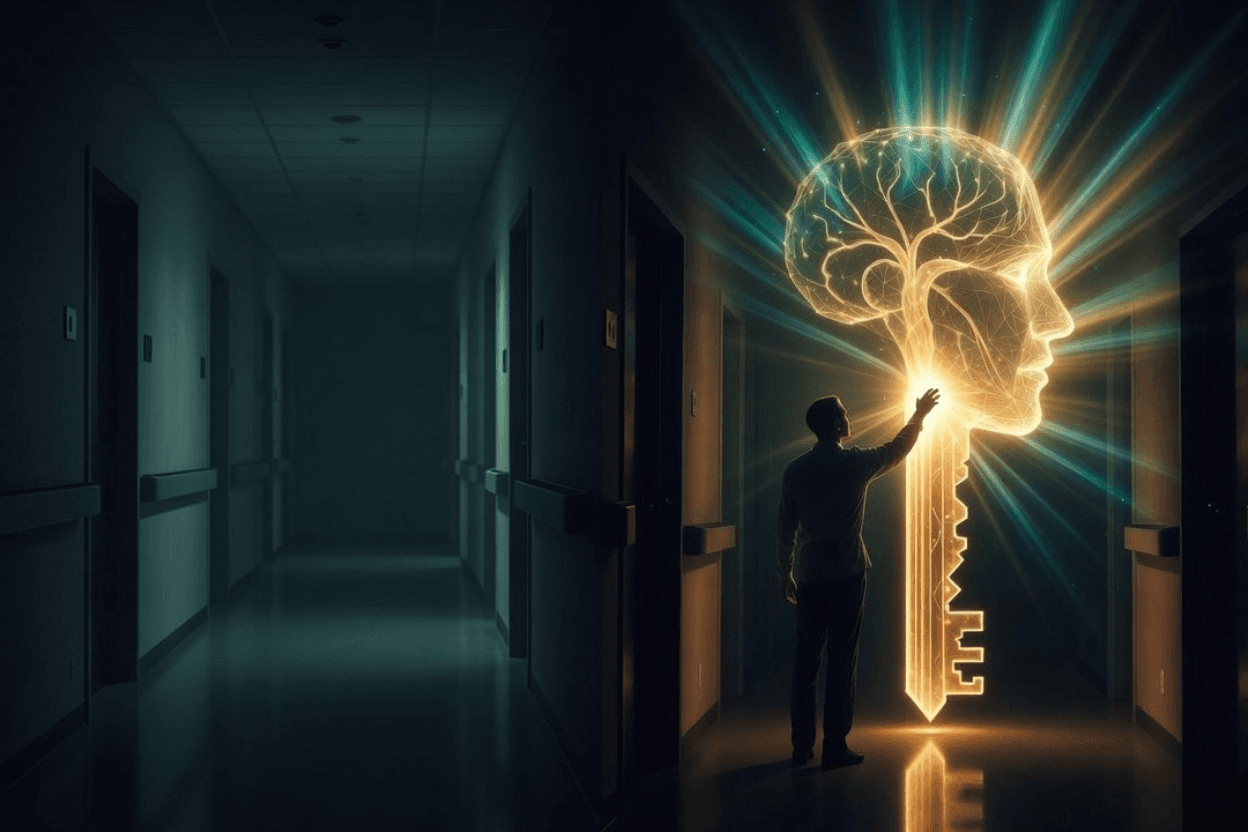


 Willpower
Microbes don't have willpower, but they show us what it looks like: they adapt, endure, and flourish where nothing should. Call it microbe willpower, and let it remind you what you already carry.
What microbes teach us ––Thriving in harsh places.
Microbes live in boiling springs, polar ice and the deep sea. They adapt, survive, and, against the odds, find a way to flourish. Healthcare is a harsh environment too. You face daily challenges that look impossible to anyone watching from outside. Like those microbes, your willpower can grow even in the harshest conditions.


Willpower on the ward
Think of the moment you stood before exhaustion and still found one more ounce of compassion for a patient who needed it. Think of the time you faced heartbreak and still held a colleague's hand so they knew they were not alone. Those are small triumphs of microbe willpower, and they define who you are.
One story stays with me. A nurse worked with a patient who had all but given up: frail, silent, unresponsive. Week after week, the nurse came back with care and unwavering hope. Slowly, the patient spoke a first word, then a sentence, and finally left our care smiling. That nurse did not just heal wounds. They reignited a light. Details have been changed in this story to protect privacy and confidentiality.
A true story, told with permission and with identifying details removed.


Guard your breaks fiercely. A microbe seizes a rare nutrient the moment it appears. Treat your rest the same way. In reality, breaks aren't always possible—shifts can be relentless, and urgent demands don't always allow downtime. If a proper pause feels out of reach, even a deep breath, a stretch, or a moment to step back can make a difference. Take the walk if you can, savour the coffee if the moment allows, and drop the guilt about pausing for just a few minutes. Your resilience depends on recharging, even in its smallest forms.
Connect and reflect. Share stories with your peers. Talk about what overwhelms you, what inspires you and what keeps you coming back. Microbes thrive in communities, and so do we. These conversations strengthen your wellbeing and your resilience.
Check in with yourself. Regular check-ins are not a luxury. Body, mind and spirit all need tending, whether that means therapy, a hobby, or simply letting yourself feel. Each one feeds your willpower.


We adjust, we persevere, we thrive
We are a community of caregivers in one of the most demanding professions. Every step forward, every patient comforted, and every life saved proves our resilience. Like the tiniest microbe, we do not give up. We adjust, persevere, and thrive.


Every time you think you have reached your limit, remember the microbe's lesson: draw strength from the smallest moments of progress.
Patricia Maris, Founder, e7D-Wellness
Where does your willpower stand?
Willpower is one of the eight pillars behind everything we build at e7D-Wellness. The free compassion fatigue assessment takes about 8 minutes and helps you identify which pillar is draining you most. After you finish, you'll immediately receive a summary of your results, highlighting your strengths and areas needing support. Over time, MarisGraph tracks your progress and uses these results to provide personalised insights and feedback to help you build resilience. All feedback is delivered in a clear, confidential format, so you can see your growth and access recommendations tailored to you.
Key Takeaways
Resilience is not about never struggling. It is about adapting and continuing.
Your willpower grows under pressure, and it needs recharging.
Small acts of care, for patients and for yourself, add up.
Rest, connection and regular check-ins are the three practices that protect your willpower.
Looking after yourself is how you keep caring for others.
Here is to the power of microbe willpower. May it guide us forward, inspire us to care deeply, and remind us that we have immense strength even in our smallest acts. Thank you.
If you are struggling, call Lifeline on 13 11 14, or 000 in an emergency.
View Recommended Resources
1. Psychological interventions to foster resilience in healthcare professionals
Kunzler et al., Cochrane Database of Systematic Reviews, 2020.
What it found: a review of 44 randomised trials, 39 of them with healthcare professionals (6,892 participants). After resilience training, participants had higher resilience and lower depression and stress than controls. Three studies reported adverse effects, and none found any.
Caution: the authors rate the certainty of the evidence as very low and ask for better studies.
Why it suits your article: it is the strongest HCP-specific evidence that resilience can be trained.
2. Burnout and self-regulation failure: a diary study of self-undermining and job crafting among nurses
Roczniewska and Bakker, Journal of Advanced Nursing, 2021.
What it found: 81 nurses completed daily diaries over 10 workdays. On days when a nurse’s self-regulation was stronger before work, she undermined herself less and shaped her work better, and performed better. The full pattern appeared only in nurses with low burnout.
Why it suits your article: it supports your point that willpower needs protecting. Burnout wears down day-to-day self-regulation, so rest and recharge matter.